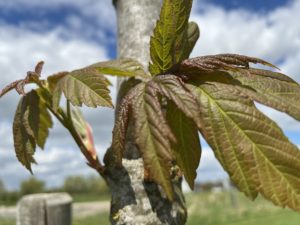
I love spring. I love the dramatic hues of new leaves … the bold green grass … dark purple of unfolding nettles … yolk-yellow daffodils. Now that it’s May in Germany the Bauernjasmin (“farmer’s jasmine”) Philadephus blooms and the air smells deliciously sweet and fresh.
As it’s about to hit nearly 30 C (86 F) this week, however, spring will soon be over, so I wanted to share a few impressions of May along Schlichter Weg.
 Your trees have made it through two winters! The 50 Trees flourished after a wet November to February, which saw the seasonal ponds on the property again filled and the lakes back to a nearly normal level after several years of drought. But it’s been a dry spring so far, having rained only 2 – 3 times since early March. If it does not rain soon, we’ll be hauling out the hoses. New trees need about 200 liters every few weeks and we’re reaching a critical point where, if it doesn’t rain soon, we’ll have to begin
watering.
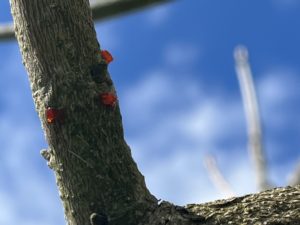 That being said, we only lost one tree over the winter, an oak native to Italy and Hungary (Quercus frainetto ‘Forest Green Schmidt’) that suddenly experienced leaf drop at the end of the summer last year.
Here’s a picture of a strange red sap coming out of its branches, and the tree now (below left). Though Quercus frainetto is supposed to tolerate all kinds of soils and be a good choice for industrial areas due to its hardiness, this little Schmidt apparently found the raw pampas of northeastern Germany de trop .
.
Could it be chestnut blight? Sudden oak disease? That or that it was planted in construction debris from when we dug out the wildflower garden: too dry and too much concrete and clay instead of soil. In any case, we’ll try to find a new Schmidt another spot and hope she adjusts to life an hour from Poland.
With war in Ukraine — Lviv is nine hours from Krumbeck — and after two
years of pandemic, nature continues to give us solace and inspiration, sustenance and occasionally even shade! We fervently hope for peace, for everyone, everywhere.
In the meantime, the plant’s eye view of your trees (the ghostly spires against an almost tropical spring sunset). The juicy green in the foreground is the new growth of Papaver orientale and Achillea filipenulina ‘Parker’s Variation’. From this vantage point all seems right with the world.

 After two winter seasons on lockdown, we’ve spent most of these cold months in Berlin, enjoying the first cracks of “opening” — Christmas Eve spent with friends, a few dinners at home with other families, the Philharmonik, a haircut or two.
 It turns out trees grow in front of your eyes!
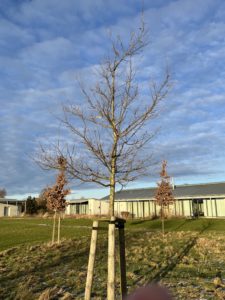 Their branches have not yet begun to spread out significantly, but they are beginning to shake off the posts installed to keep them upright. (The posts rot in the ground and eventually fall over.) They even, on sunny winter evenings—what are those?—cast a decent shadow.
 Herbst (autumn) has arrived in the north of Germany. After a few sunny weeks at the beginning of September we are today enjoying Platzregen (just like it sounds!) which should do your trees well.
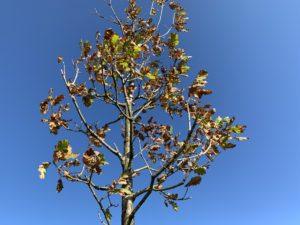 Despite the rain, two oaks fell sick — Quercus petraea and Quercus frainetto. One of them turned yellow in August, the other went completely brown shortly thereafter and lost all its leaves. There is still sap in the branches and we’re hoping for a recovery next spring. We think it may be related to a beetle that has damaged a nearby colossus, a tragedy, since this tree is probably several hundred years old and sits at the beginning of Schlichter Weg, the old country byway home to fields, hedgerows, and a beech and larch forest.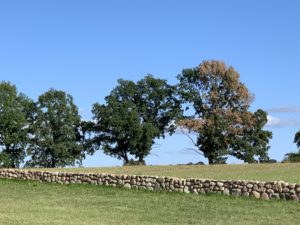
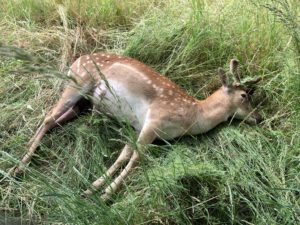 The experience of witnessing the cycle of life and an apex predator just meters away from us was very profound. The renewed presence of wolves in Germany after a century of being hunted to near extinction is a much discussed political issue in our area and we have a lot to learn. But we were awestruck by their presence so close to us. It was the feeling that something in nature must also be going right.
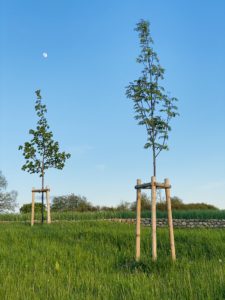 Thanks to the coldest May in Germany since 1815 and much snow and rain from December till June the 50 trees have survived their first winter and are in bud.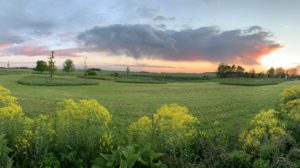
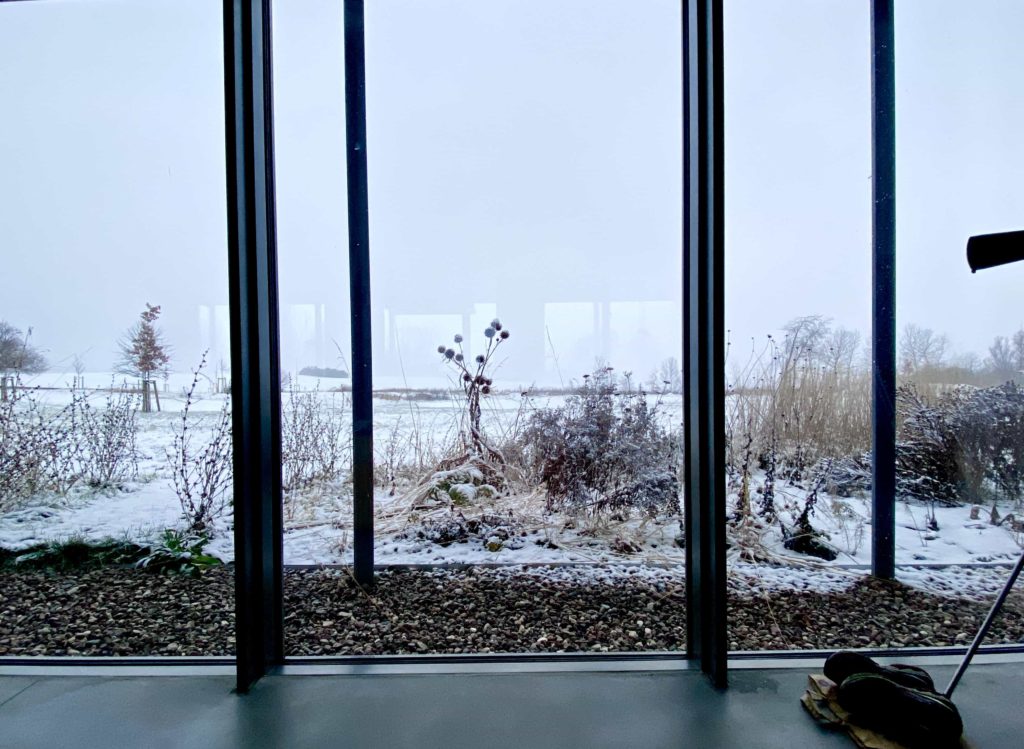 0It’s February and for the first time since we moved in, it’s been snowing!
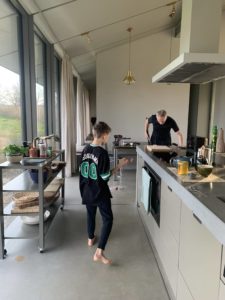 In the middle of December we went on countrywide lockdown again here in Germany. Back to homeschooling, sourdough and Zoom. We are grateful to be here.
 vision along specific lines into the distance.